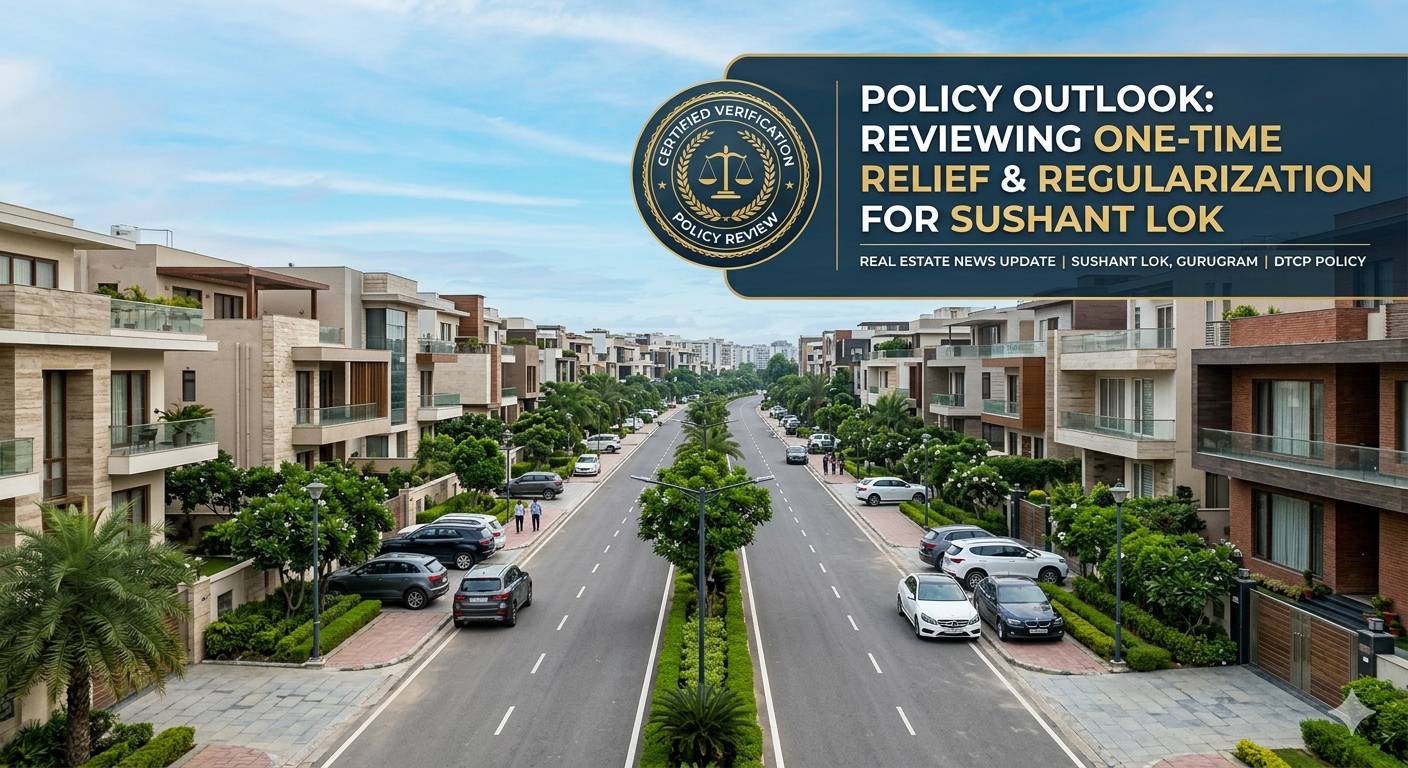
The residential property market in the National Capital Region (NCR) is actively tracking a major policy push for structural regularization. Seeking a comprehensive solution to ongoing zoning disputes, the submission of a formal proposal titled “Regularise minor building violations: Plea seeks one-time relief policy for Sushant Lok 1, 2 and 3” is giving thousands of local landlords a legal path to secure their assets.
Submitted to the Directorate of Town and Country Planning (DTCP) Haryana, the petition represents homeowners across these prominent, low-density colonies. For real estate buyers, independent floor developers, and property investors in Gurgaon, this developing administrative request could shift how minor architectural and floor-area-ratio (FAR) deviations are managed across the city’s established plotted townships.
Core Breakdown: The Demand for an Institutional Amnesty Scheme
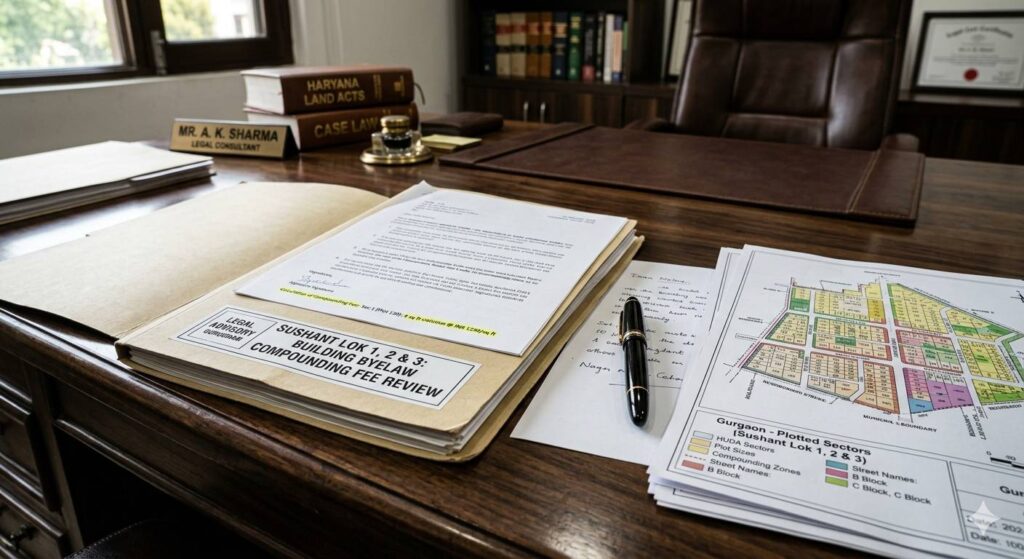
The legal plea argues that a blanket enforcement approach—such as sudden property sealings or utility disconnections—is counterproductive compared to a structured, revenue-generating regularization framework. Resident bodies state that many structural deviations were minor additions made by individuals to accommodate growing families over time.
The core demands outlined in the regularization plea focus on three key administrative reliefs:
- Compounding Fee Regularization: The petition requests a policy framework where deviations under a certain technical threshold—such as minor projections, extra balconies, or slight changes in built coverage—can be fully regularized by paying a transparent compounding fee.
- Case-by-Case Technical Audits: Instead of broad neighborhood actions, residents want the DTCP to conduct individual property evaluations, distinguishing between minor residential adjustments and massive commercial violations.
- Restoration of Essential Utilities: Homeowners are seeking immediate, temporary relief from power and water disconnections for properties that are currently participating in regular independent building plan inspections.
The Infrastructure Strain vs. Homeowner Relief Conflict
While the plea offers a path to legal safety for property owners, municipal planners face the ongoing challenge of balancing relief with neighborhood infrastructure capacity.
- Overloaded Civic Facilities: Supporting civic groups note that unauthorized structural expansions strain local utilities, causing drops in municipal water pressure, overloaded neighborhood transformers, and parking congestion on sector roads.
- Crucial Financial Revenue: Conversely, introducing a one-time relief scheme would generate substantial compounding revenue for the state, which could be directly reinvested into upgrading roads, drainage networks, and green spaces in Sushant Lok.
- Stability for the Resale Market: Granting amnesty would instantly unlock blocked resale inventory, enabling banks to confidently clear retail home loans for properties that previously faced zoning scrutiny.
Pros & Cons of an Amnesty Policy for Real Estate Portfolios
Pros
- Restores Property Liquidity: A formal regularizing policy clears pending titles, allowing owners to smoothly sell, lease, or transfer independent floors without registration delays.
- Protects Household Capital: Homeowners are insulated from total capital loss or forced demolitions, stabilizing values across Sushant Lok 1, 2, and 3.
Cons
- Sets a Difficult Precedent: Introducing regular amnesty windows might encourage future construction compromises, making long-term master plan zoning harder to enforce.
- Prolonged Policy Finalization: Waiting for the state government to draft, review, and notify an official compounding scheme can create temporary transaction pauses across the targeted sectors.
Due Diligence Guide for Plotted Property Buyers

While the town planning department reviews the amnesty plea, buyers looking at independent low-rise floors must perform careful due diligence to safeguard their investments:
- Audit Against Stamped Blueprints: Hire an independent surveyor to verify that the property’s physical dimensions strictly align with the original building plans approved by the DTCP.
- Confirm Clear Stilt Areas: Check that the ground-level stilt parking remains completely open and free from any illegal offices, driver rooms, or unauthorized conversions.
- Verify a Valid Occupancy Certificate (OC): Never close a transaction or make final payments unless the seller provides a genuine, certified copy of the OC issued by the competent municipal authority.
Unsure how the proposed regularization policy or current DTCP building norms affect your real estate values in Sushant Lok? Connect with our specialized compliance desk today to receive a comprehensive, independent structural title review.
- Call / WhatsApp Us: +91-88-606060-77
- Enquire Now: Request a free compliance report on top-performing, fully vetted residential and plotted corridors across Gurgaon.