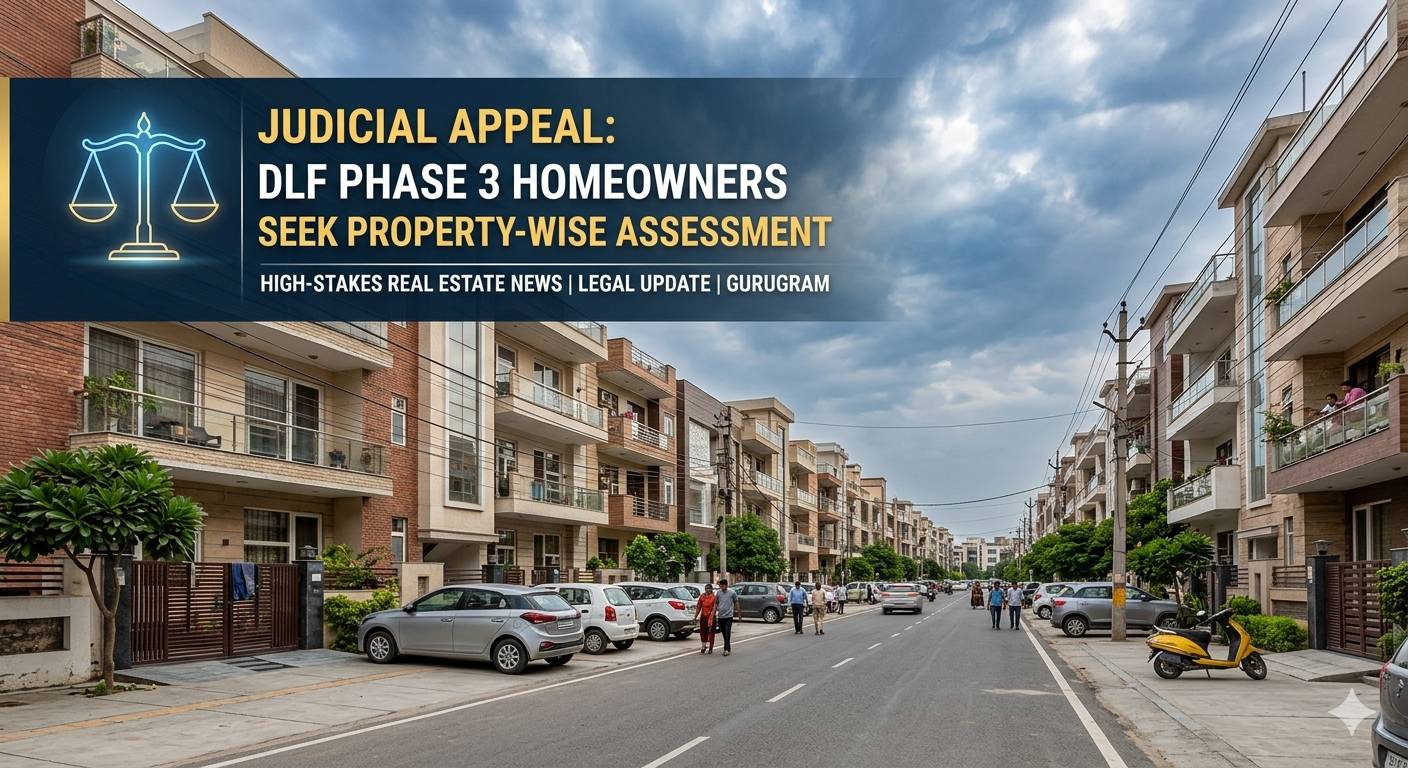
The residential property sector in the National Capital Region (NCR) is witnessing a major legal dispute over local enforcement procedures. Spurring an organized legal counter-strategy by local landlords, homeowners in Gurugram to move court against blanket action on 2,500 houses in DLF Phase 3, directly challenging uniform code enforcement measures across the neighborhood.
Triggered by a resumed sealing and demolition drive by the Department of Town and Country Planning (DTCP), the dispute focuses on the EWS blocks of U Block, situated near Gurgaon’s Cyber City corridor. For property investors, rental income managers, and luxury developers across Gurgaon, this unfolding courtroom battle highlights how micro-market building violations can heavily impact neighborhood liquidity and residential real estate values
The Fault Line: Uniform Enforcement vs. Property-Wise Assessment
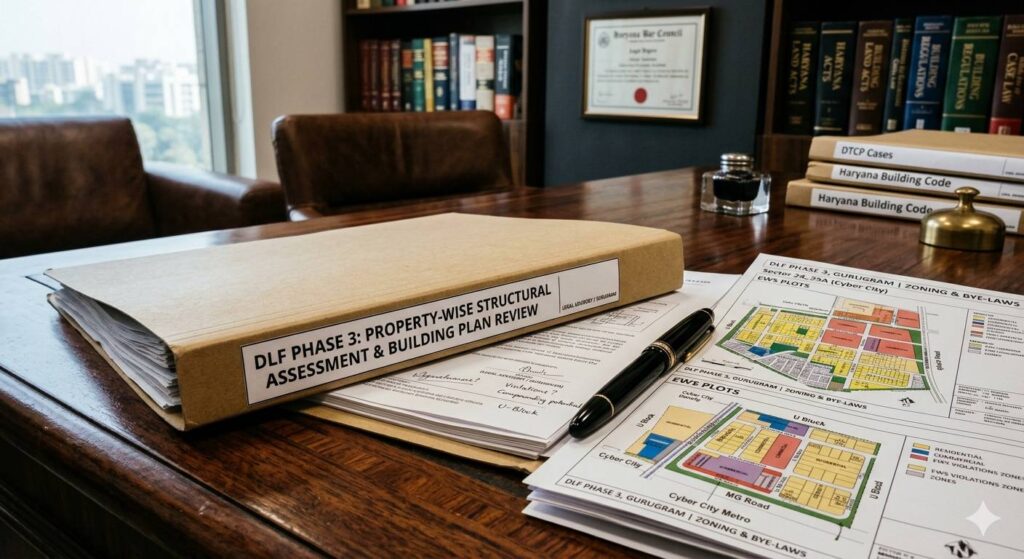
The core conflict in DLF Phase 3 centers on whether municipal authorities should apply broad, uniform enforcement actions across an entire sector or review individual property variations separately.
The DTCP Gurgaon survey identified 1,362 specific infractions within the block, including stilt parking conversions, unauthorized vertical extensions, and illegal commercial uses like paying guest (PG) accommodations. However, the homeowners association argues that a rigid, area-wide approach unfairly penalizes compliant structures:
- Varying Violation Degrees: Residents contend that while roughly 104 buildings have been built up to seven or eight floors, the vast majority conform closer to standard stilt-plus-four height ceilings.
- Demands for Individual Audits: Homeowners plan to submit detailed engineering briefs showing the exact number of floors and construction methods for each property, seeking case-by-case reviews rather than broad neighborhood actions.
- Plea for a Regularization Roadmap: Property owners are asking the Haryana government to introduce a practical, policy-based framework to regularize minor design deviations through compounding fees, avoiding immediate demolitions.
Economic Rationale: Cyber City’s Critical Rental Supply
Beyond building heights, the legal challenge highlights the unique economic role that DLF Phase 3 plays in supporting Gurgaon’s massive corporate workforce.
- Essential Corporate Housing Hub: These high-density blocks provide crucial affordable housing and managed PG accommodations for thousands of young professionals employed at nearby tech hubs.
- Livelihood Implication Risks: For many local families, monthly rental collections from these units serve as their primary source of household income.
- The Overloading Strain: Conversely, civic groups supporting the enforcement actions point out that unauthorized multi-story extensions overload local infrastructure, leading to choked sewer networks, low water pressure, and heavily congested sector roads.
Pros & Cons of the Judicial Challenge for Property Portfolios
Evaluating this active property dispute requires balancing short-term real estate liquidity against long-term neighborhood quality:
Pros
- Protects Innocent Capital: Moving to court helps small-scale property owners who bought independent floors in good faith secure temporary legal relief from immediate demolition drives.
- Paves Way for Balanced Policies: A successful petition could push the state to introduce transparent compounding guidelines for minor floor plan variations across Gurgaon.
Cons
- Temporary Resale Lockouts: Properties located within sectors undergoing active DTCP structural scrutiny often face sudden drops in resale transaction speeds.
- Home Loan Approval Delays: Major banking institutions typically halt fresh retail home loan clearances for independent floors in sectors flagged for zoning audits until courts issue definitive rulings.
Due Diligence Guide for Independent Floor Buyers

As enforcement agencies tighten checks across Gurgaon, buyers looking at independent low-rise floors must exercise careful due diligence to insulate their investments from future code disputes:
- Verify the Stamped Zoning Blueprints: Cross-check the property’s physical floor layout against the original building blueprints stamped by the Directorate of Town and Country Planning (DTCP).
- Confirm Strict Stilt Parking Rules: Ensure the ground-level stilt parking zone remains open and clear of any illegal employee rooms, shops, or commercial offices.
- Demand a Certified Occupancy Certificate (OC): Never complete final balance payments or take physical possession of an independent floor without receiving a verified copy of the official OC issued by the competent authority.
Concerned about how upcoming municipal zoning reviews or DTCP building plan audits will affect your property values in Gurgaon? Connect with our specialized real estate compliance desk today to receive a free, comprehensive structural record check.
- Call / WhatsApp Us: +91-88-606060-77
- Enquire Now: Request an off-market report on 100% verified, litigation-free premium residential corridors in Gurgaon’s newest growth sectors.