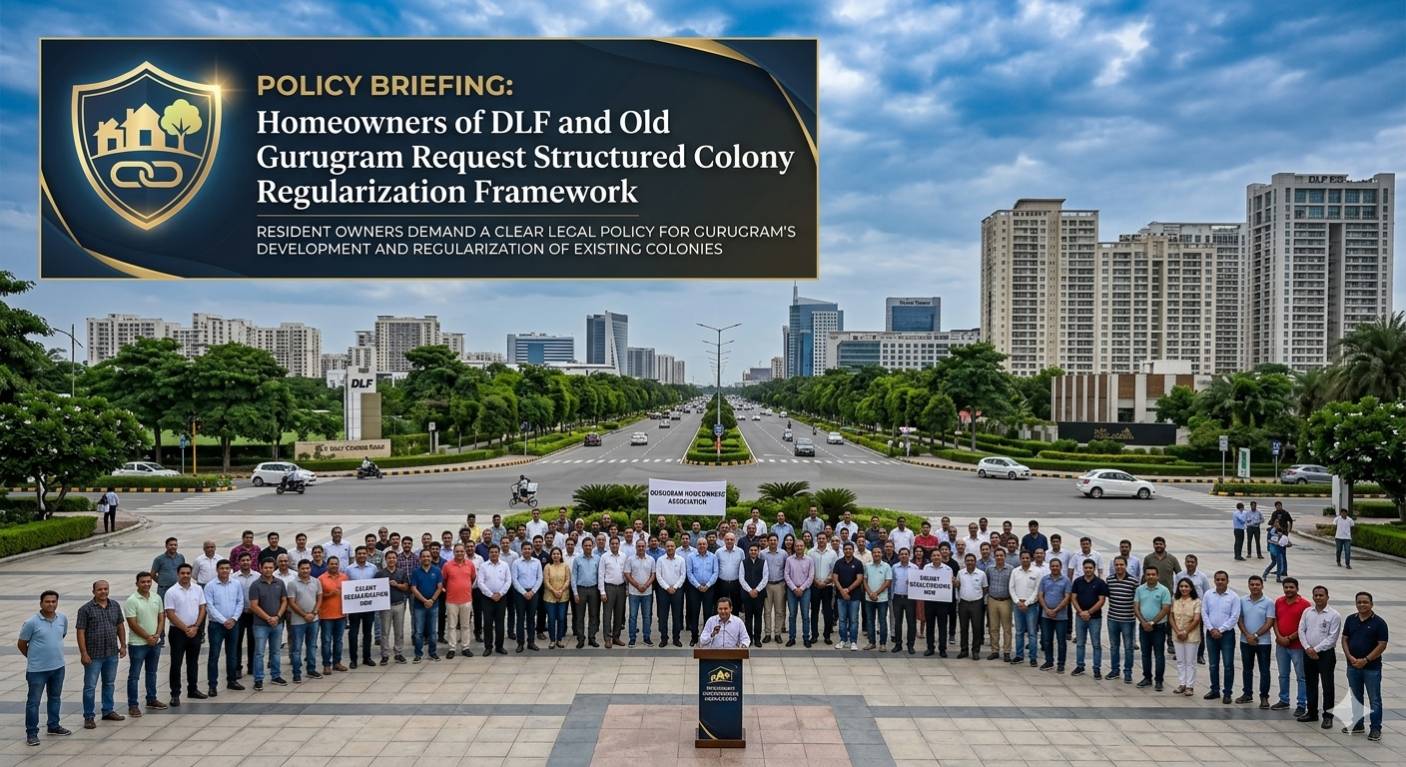
The residential property market across the National Capital Region (NCR) is experiencing a widespread civic and legal mobilization. Uniting long-standing urban neighborhoods with modern corporate sectors, home owners of DLF & Old Gurugram denounce bulldozer action, demand regularisation of colonies, directly organizing a collective strategy to halt immediate demolition operations.
Triggered by an aggressive series of structural clearing campaigns by the Department of Town and Country Planning (DTCP) and the Municipal Corporation of Gurugram (MCG), this coordinated protest brings together diverse resident welfare networks. For individual property owners, independent floor developers, and micro-market rental managers across Gurgaon, this unified stand signals a significant turning point in the resistance against broad neighborhood enforcement drives.
The Core Dispute: Selective Audits vs. Broad Demolitions
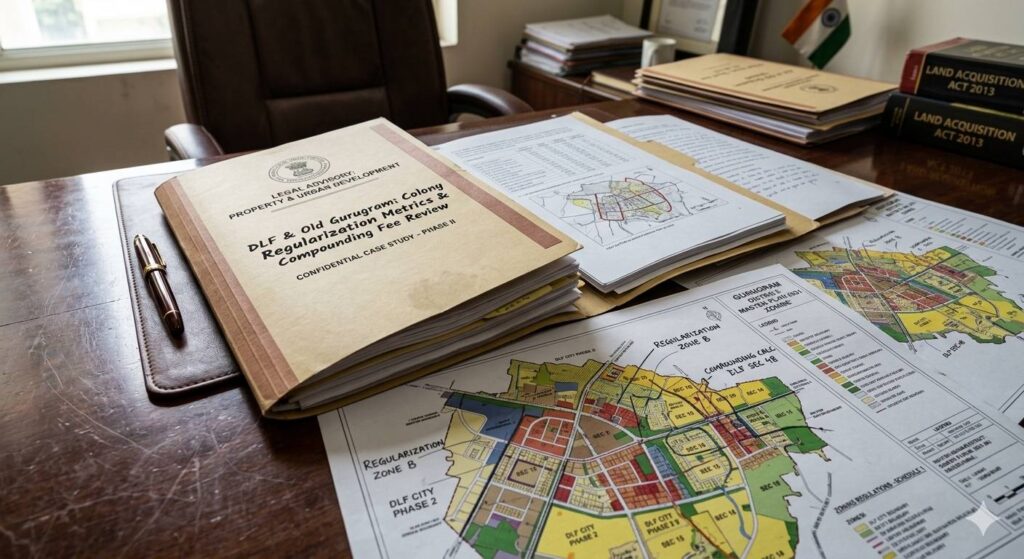
The immediate conflict stems from recent enforcement actions targeting unauthorized multi-story extensions, illegal structural projections, and unlicensed paying guest (PG) conversions. While local planning bodies maintain they are acting on strict judicial mandates, resident groups argue that immediate, heavy-handed demolitions disregard individual property situations.
The primary demands presented by the joint homeowner coalitions focus on three main points:
- An Immediate Moratorium on Demolitions: Residents are seeking an immediate pause on active structural clearing operations, demanding that municipal teams stop using heavy machinery until comprehensive legal reviews are completed.
- A Comprehensive Regularization Policy: Homeowners are urging the Haryana government to introduce a practical, city-wide amnesty scheme. This framework would allow minor building deviations to be fully regularized by paying clear, standardized compounding fees.
- Individualized Property Reviews: Homeowners argue that applying a blanket neighborhood approach unfairly penalizes compliant buildings. Instead, they demand individual structural audits that distinguish minor design alterations from major commercial violations.
The Planning Dilemma: Protecting Civic Infrastructure vs. Community Investments
This escalating dispute highlights the ongoing challenge local planning departments face when balancing strict city code enforcement with protecting private household investments.
- Severe Strain on Civic Utilities: Municipal engineers point out that unauthorized floor additions place a heavy burden on local grids. This infrastructure strain leads to frequent transformer failures, drop-offs in water pressure, and sewer system backups across local blocks.
- Protecting Household Capital: Conversely, community advocates emphasize that for thousands of families in both Old Gurgaon and the DLF sectors, these properties represent their primary lifetime investment and source of rental income. They argue that immediate demolitions harm local livelihoods.
- The Path to Revenue Generation: Residents highlight that a comprehensive regularization scheme would generate substantial compounding fee revenue for the state. This capital could be directly reinvested into upgrading local sector roads, water pipelines, and drainage networks.
Pros & Cons of the Regularization Demand for Real Estate Markets
Pros
- Unlocks Resale Property Markets: Passing a formal amnesty scheme would clear pending property titles, enabling banks to confidently approve home loans for independent floors that previously faced structural reviews.
- Stabilizes Gated Neighborhood Values: Halting sudden demolition threats helps secure community stability, restoring local transaction speeds and protecting nearby property values.
Cons
- Complicates Master Plan Planning: Creating regular amnesty windows can make it harder for municipal agencies to enforce long-term zoning guidelines, potentially encouraging future building code violations.
- Prolonged Policy Delays: Waiting for state administrative bodies to draft and finalize an official compounding framework can cause temporary pauses in transactions across affected sectors.
Essential Due Diligence Matrix for Low-Rise Floor Buyers

While the state government reviews the community petitions, buyers evaluating independent low-rise floors or plotted developments in Gurgaon must execute strict due diligence steps to protect their capital:
- Verify Approved Building Layouts: Cross-check the property’s physical floor layout directly against the original structural blueprints stamped by the DTCP Haryana.
- Confirm Clear Stilt Parking Areas: Ensure the ground-level stilt parking zone remains open, unencumbered, and completely free from any unauthorized commercial conversions or offices.
- Demand a Certified Occupancy Certificate (OC): Never close a transaction or complete balance payments for an independent low-rise floor unless the developer provides a valid, certified copy of the OC issued by the competent authority.
Concerned about how upcoming town planning reviews or active DTCP building audits affect your property values in Gurgaon? Connect with our specialized real estate compliance desk today to receive a free, comprehensive structural record check.
- Call / WhatsApp Us: +91-88-606060-77
- Enquire Now: Request an off-market report detailing the top 10 fully verified, litigation-free premium residential corridors in Gurgaon.