The infrastructure development of the National Capital Region (NCR) faces ongoing challenges over localized road handovers and acquisition hurdles. Highlighting a seven-year infrastructure bottleneck, Gurugram sector 102 residents demand completion of planned 24 meter roads, filing an official appeal with the state administration to unlock critical network links.
Led by the Emaar Imperial Gardens Condominium Association, more than 500 local households have submitted a formal memorandum to the Additional Chief Secretary of the Town and Country Planning Department (DTCP). The dispute focuses on three missing 24-metre-wide arterial roads that exist in approved sector master plans but have sat completely unbuilt due to prolonged land acquisition delays. For property buyers, premium high-rise allottees, and transit infrastructure analysts along the Dwarka Expressway corridor, this mobilization highlights how missing micro-market links heavily restrict neighborhood safety, transit ease, and asset appreciation.
Technical Case Analysis: The Missing 24-Metre Road Stretches
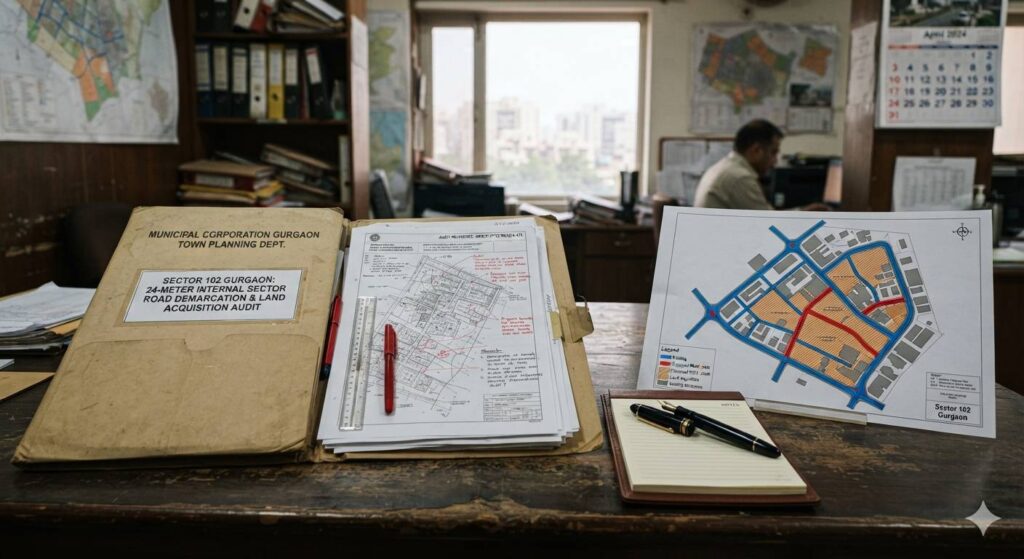
The long-standing conflict in Sector 102 underscores the divide between structural development plans on paper and real, brick-and-mortar execution on the ground.
According to the local Resident Welfare Association (RWA), individual private builders have successfully laid localized fractions of these internal road networks within their specific project lines. However, the broader regional corridor remains entirely disconnected due to unclear land acquisition policies:
- The Dwarka Expressway Bottleneck: The primary 24-meter road network is specifically designed to connect local high-rise societies directly to the main Dwarka Expressway and the Upper Dwarka Expressway. The current blockages completely isolate these gated complexes.
- Private Land Encroachment Intersections: Prominent stretches of the planned layout routes cut directly through unacquired private farm holdings and undeveloped parcels owned by third-party developers, stopping any consecutive construction.
- Severe Monsoonal Flooding Strain: Because these alternative planned escape routes are blocked, hundreds of families are forced to rely on single, broken secondary lanes that flood during heavy monsoons, leaving school transport vehicles and commuter traffic entirely stranded.
The Regulatory Policy Conflict: Unexecuted TDR Mandates
The gridlock persists despite high-level administrative policy announcements intended to clear exactly these kinds of localized transit bottlenecks across Gurgaon’s newer growth sectors.
- The Budgetary TDR Framework: While presenting the state budget, Chief Minister Nayab Singh Saini acknowledged the critical access issues faced by lakhs of families living in licensed colonies. He resolved that a permanent solution to this problem would be implemented by using the state’s Transferable Development Rights (TDR) policy.
- The Builder Recovery Clause: Under the notified framework, the DTCP Gurgaon is authorized to initiate active land acquisition processes to build these missing 24-meter sector roads, with the total financial expenditure recovered directly from the respective project developers.
- The Implementation Gap: Despite these formal announcements, Sector 102 residents report zero physical progress, prompting demands for immediate official demarcation, boundary marking, and prioritized land asset clearings.
Pros & Cons of Infrastructure Litigation for Nearby Property Portfolios
Pros
- Boosts Local Connectivity: Successfully forcing the completion of these three 24-meter sector roads instantly opens multiple entry and exit points, boosting neighborhood safety and easing traffic.
- Enhances Asset Appreciation Potential: Resolving chronic approach-road issues directly raises the long-term capital valuation and rental demand for premium societies along the expressway.
- Secures Emergency Access Corridors: Wide internal pathways guarantee that heavy fire engines, rescue vehicles, and ambulances can reach high-rise complexes without dangerous delays.
Cons
- Extended Acquisition Timelines: Resolving land compensation disputes with local private farmers can take months to process through the courts, prolonging final road completion dates.
- Potential External Cost Adjustments: If the cost of land acquisition is recovered from developers, builders might attempt to pass these extra infrastructure costs onto buyers via future maintenance fee re-calculations.
Due Diligence Guide for Premium Apartment Buyers

As the town planning department reviews the layout petitions, property buyers evaluating luxury developments along the Dwarka Expressway must verify a project’s actual connectivity markers:
- Audit Actual Approach Infrastructure: Never base an investment solely on a project’s marketing layout brochures. Physically drive the entire approach path to ensure the access road is a legally acquired, wide municipal transit link.
- Cross-Verify Zonal Right-of-Way Records: Use the GMDA Geospatial Portal to verify that the entry routes leading to the project do not cut across unacquired private properties or disputed farmlands.
- Inspect Developer Infrastructure Deposits: Confirm that the builder has cleared all External Development Charges (EDC) and internal layout fees with the state revenue department, minimizing the risk of future infrastructure delays.
Unsure how current land acquisition delays or missing sector roads affect your real estate values in Sector 102? Connect with our specialized real estate compliance desk today to receive a free, comprehensive infrastructure audit of your property area.
- Call / WhatsApp Us: +91-88-606060-77
- Enquire Now: Request an off-market report detailing the top 10 fully verified, litigation-free residential developments featuring 100% completed infrastructure links in Gurgaon.