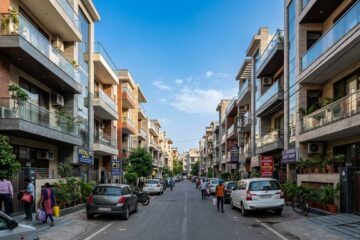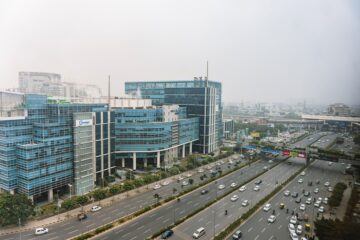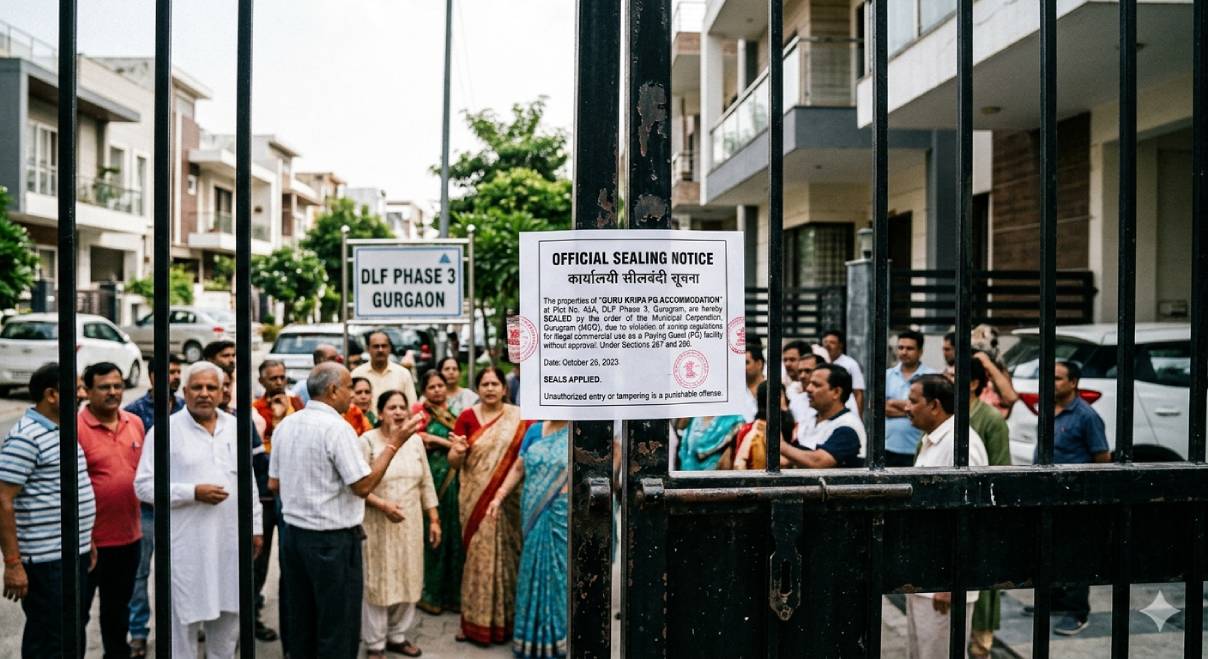
The illegal paying guest (PG) market in Haryana is hit by a massive enforcement crackdown, intensifying demands for the regularisation of PGs in Gurugram. Following strict directions from the Punjab and Haryana High Court, the Department of Town and Country Planning (DTCP) launched an aggressive campaign to seal commercial guest accommodations operating unlawfully out of residential zones.
┌────────────────────────────────────────────────────────┐
│             GURUGRAM PG SEALING ACTION PROFILE         │
├───────────────────────────┬────────────────────────────┤
│   Primary Target Areas    │  DLF Phases 1 to 5         │
├───────────────────────────┼────────────────────────────┤
│   Eviction Notice Buffer  │  Vacate by June 30 Deadline│
├───────────────────────────┼────────────────────────────┤
│   Next Phase Resumption   │  July 1 Enforcement Push   │
├───────────────────────────┼────────────────────────────┤
│   Total Mobilised Force   │  500+ Property Stakeholders│
└───────────────────────────┴────────────────────────────┘
The ongoing sealing and restoration drive has triggered intense resistance from property operators. Hundreds of property owners organised a large-scale mahapanchayat and protest march at the U Block Metro Park in DLF Phase 3 under the banner “Stop Sealing, Stop Demolition”. Operators argue that a sudden blanket ban will create a severe affordable housing shortage for the massive corporate workforce residing in the millennium city.
The Root Cause Behind the DTCP Crackdown
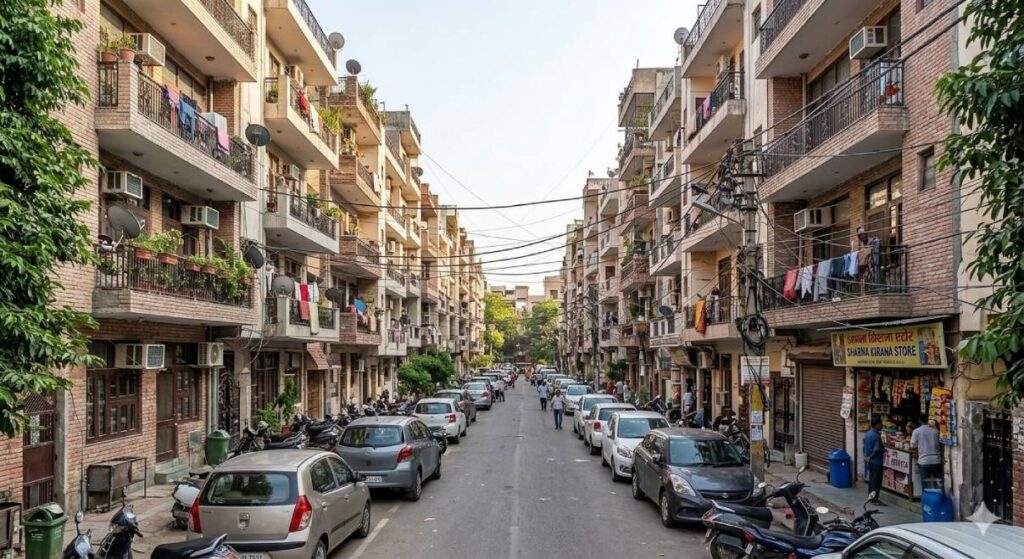
For years, many homeowners in premium residential sectors converted standard plots into multi-storey commercial PG units without acquiring change of land use (CLU) certifications or building plan approvals. The current judicial mandate requires the DTCP to systematically restore these commercial properties back to standard residential frameworks.
The distribution of eviction notices has sent shockwaves through the local ecosystem:
- Tenant Displacement: The DTCP enforcement team distributed pamphlets warning young IT professionals and students to vacate targeted structures immediately.
- Financial Losses: Tenants report being forced to leave within a matter of hours, facing immediate housing insecurity while losing heavy security deposits.
- Widespread Structural Damage: Properties that failed to comply with original architectural guidelines face strict demolition of structural extensions built beyond permissible limits.
The crackdown focuses on high-density residential belts situated along the Rapid Metro line, including DLF Phase 1, 2, 3, 4, and 5.
Pros and Cons of a Regularisation Policy for PGs

Protesting operators have submitted a formal memorandum to Haryana Chief Minister Nayab Singh Saini and Union Minister Rao Inderjit Singh. They demand that the government drop sealing actions in favor of a structural regularisation policy.
The Advantages (Why Regularize?)
- Protects Livelihoods: Safeguards the substantial capital investments made by local homeowners who depend on rental yields.
- Maintains Affordable Housing: Ensures that thousands of migrant corporate employees retain access to low-cost living spaces near their workplaces.
- Generates State Revenue: Legalises establishments by charging prescribed regularisation fees, penalties, and commercial utility taxes.
The Disadvantages (Why Strict Enforcement Matters)
- Severe Infrastructure Strain: Unregulated mega-PGs cause frequent drainage blockages, severe garbage accumulation, and acute water shortages in residential sectors.
- Safety Violations: Most illegal PGs operate as fire hazards, completely lacking secondary exits, smoke alarms, or structural stability clearance.
- Civic Disruptions: Commercialising residential colonies leads to severe vehicle parking disputes and overcrowding, destroying the peace of neighborhood residents.
Legal and Practical Advice for Affected Tenants and Owners
If you are a property owner or a tenant caught in the ongoing DLF area sealing drive, immediate self-preservation measures are vital to protect your capital and peace of mind.
  ┌────────────────────────────────────────────────────────┐
  │              PG CRISIS SURVIVAL CHECKLIST              │
  ├────────────────────────────────────────────────────────┤
  │ [ ] Owners must immediately cross-verify building deviations│
  │     against original sanctioned DTCP plans.            │
  │                                                        │
  │ [ ] Tenants should demand written confirmation of a     │
  │     building's commercial or guest house clearance.     │
  │                                                        │
  │ [ ] Displaced individuals must secure legal lease      │
  │     agreements specifying clear deposit refund terms.  │
  └────────────────────────────────────────────────────────┘
- Review Official Commercial Approvals: Landlords must check if their property qualifies for regularisation under existing guest house policies or the Transit Oriented Development (TOD) framework.
- Secure Alternative Vetted Spaces: Tenants should look for co-living operators or managed apartments that possess verified municipal licenses to avoid abrupt evictions.
- Establish Legal Clearances: Do not sign rental agreements or pay hefty security deposits without verifying that the property is completely clear of DTCP litigation.
Balancing Growth and Urban Planning in Gurgaon
The ongoing protests highlight a deeper structural issue: Gurugram’s rapid corporate expansion has far outpaced its supply of legal, affordable rental housing. While a total sealing drive enforces the rule of law, it leaves a vulnerable workforce stranded. The ultimate solution lies in a balanced framework where the government introduces strict, clear guidelines covering parking, fire safety, and sanitation, allowing compliant units to operate transparently while penalising unsafe commercial operations.
Navigating local real estate regulations and ensuring compliance requires professional expertise. For fully verified, legally clear commercial and residential options across premium sectors, connect with our specialist consulting team.
Contact our real estate advisory team directly via Phone or WhatsApp at +91-88-606060-77 to verify your rental asset’s compliance status or explore safe investment options.