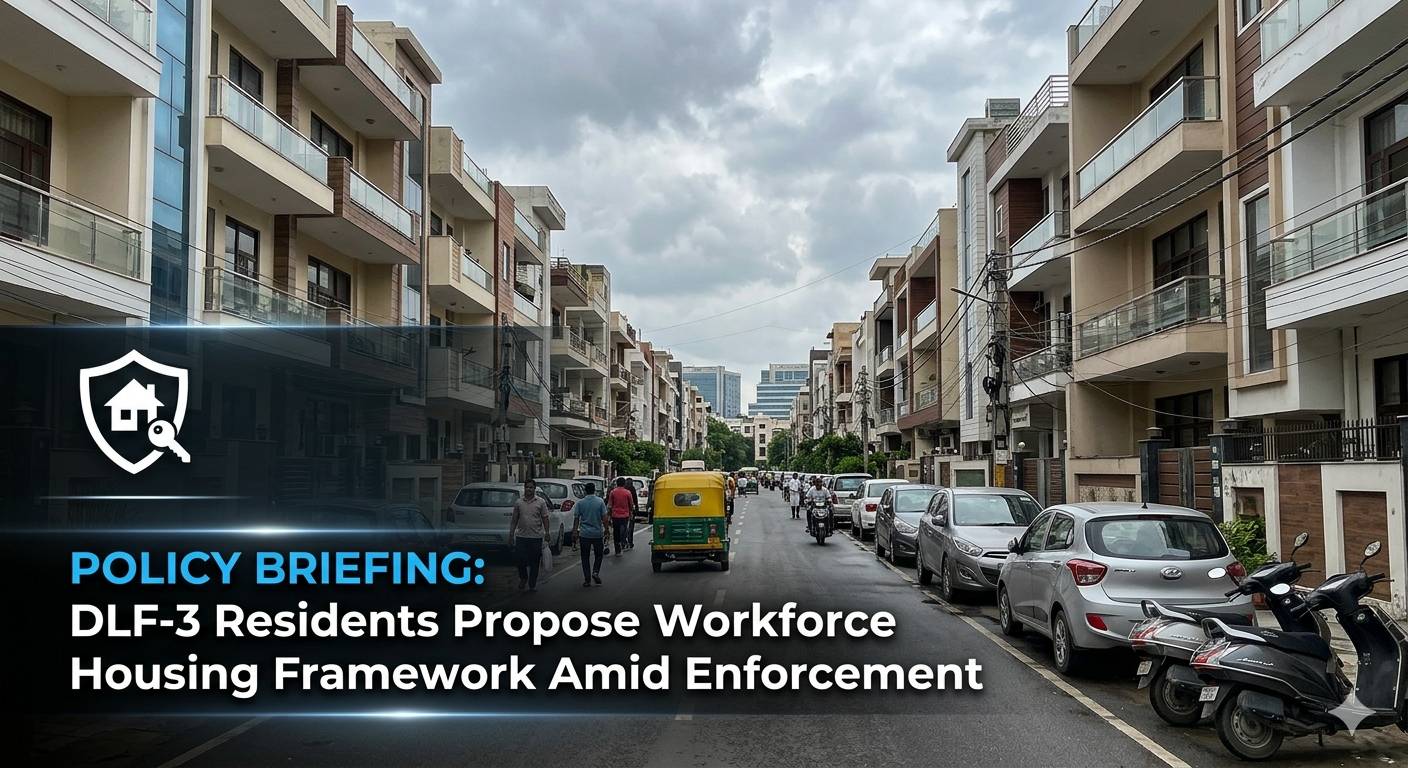
The high-density residential corridors of the National Capital Region (NCR) are facing a major structural standoff. As municipal enforcement wings step up building interventions, DLF-3 residents in Gurugram seek policy for workforce housing amid razing, urging the state to protect the critical rental infrastructure that houses the city’s corporate support workforce.
Triggered by the Department of Town and Country Planning’s (DTCP) extensive sealing operations in the Economically Weaker Section (EWS) blocks of U-Block, the legal conflict directly threatens the housing security of thousands of retail, hospitality, and corporate transit employees. For property investors, rental income managers, and urban planners across Gurgaon, this developing crisis highlights the urgent need for a balanced framework that combines zoning enforcement with practical housing solutions.
Core Breakdown: The Socio-Economic Role of U-Block
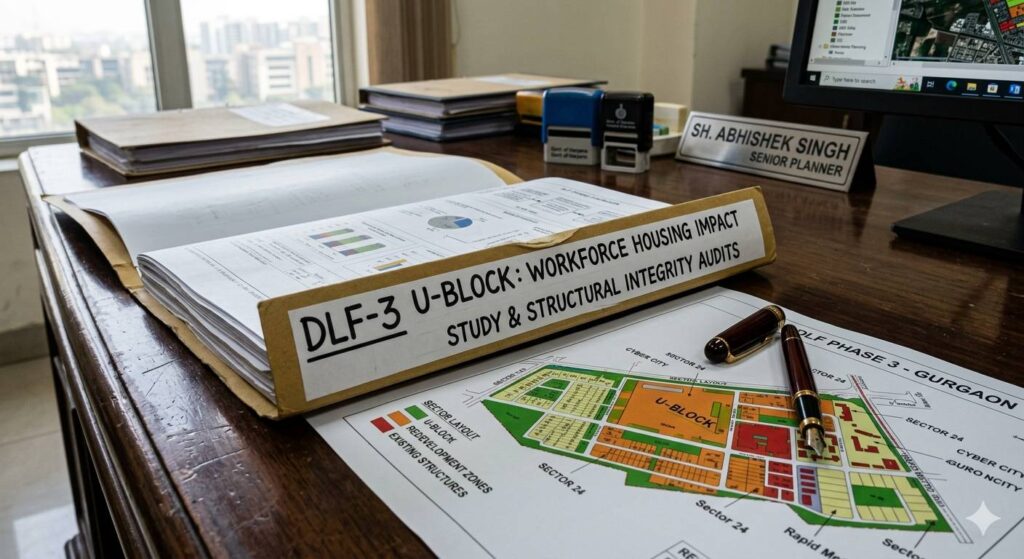
The localized enforcement grid targets multi-story structures built well past original plot approval codes. However, local resident groups state that these high-density developments have organically filled a critical gap in Gurgaon’s premium corporate real estate ecosystem.
The core arguments behind the community’s demand for a dedicated workforce housing framework include:
- Essential Support Infrastructure: Situated directly next to Gurgaon’s Cyber City corporate hub, these blocks provide affordable rental housing and managed Paying Guest (PG) spaces for thousands of young working professionals.
- Livelihood Impact Risks: For a large number of original local allottees, the monthly rental income collected from these independent rooms serves as their primary source of household income.
- Preventing Massive Displacement: Executing blanket demolition drives without a backup zoning policy risks displacing a vital corporate support workforce overnight, potentially causing operational disruptions for nearby commercial hubs.
The Regulatory Dilemma: Structural Safety vs. Civic Infrastructure Strain
While resident welfare bodies are actively seeking an institutional regularization policy, municipal enforcement agencies are facing heavy pressure from the courts to address systemic building code violations.
- Severe Utility System Overloads: Local planning bodies point out that building five to seven stories on plots meant for smaller structures severely strains local grids, causing frequent transformer failures and low water pressure.
- High-Risk Fire Hazards: Building multi-story blocks across narrow interior lanes prevents emergency vehicles from entering safely, creating a major fire hazard that cannot be ignored.
- The Demand for Compromise Fees: In response, homeowners are petitioning the Haryana government to introduce a specific corporate transit housing policy. This scheme would allow minor structural variations to be regularized through transparent compounding fees, with the revenue used to upgrade local sector infrastructure.
Pros & Cons of a Dedicated Workforce Housing Policy
Pros
- Secures Critical Rental Income: A formal regularization policy would instantly stabilize rental income portfolios, allowing landlords to safely manage their assets without the threat of sudden closure.
- Maintains Local Housing Supply: Keeping affordable housing options near major tech hubs reduces commuting times and transportation costs for Gurgaon’s corporate support workforce.
Cons
- Increases Planning Challenges: Creating a separate zoning rule for previously unapproved structures could make it harder to enforce uniform building bylaws across other parts of the city.
- Prolonged Policy Implementation: Drafting, reviewing, and formalizing a new workforce housing amendment through state departments often involves lengthy processing delays, leaving current titles in limbo.
Essential Due Diligence Matrix for Rental Property Investors

While residents petition the state for a customized workforce housing policy, real estate investors looking at high-yield rental properties in Gurgaon must run careful compliance checks to protect their capital:
- Audit Stilt Area Utilization: Ensure the ground-level stilt parking zone is open and clear of any unauthorized commercial shops, employee rooms, or office extensions.
- Verify Approved Built Height Limits: Cross-check the property’s physical floor count against the building plans officially approved by the DTCP to avoid properties flagged for structural violations.
- Mandate a Certified Occupancy Certificate (OC): Never close a transaction or complete balance payments for an independent low-rise floor unless the developer provides a valid, certified copy of the OC.
Unsure how upcoming town planning updates or DTCP enforcement reviews affect your rental properties in Gurgaon? Connect with our specialized real estate compliance desk today to receive a free, independent structural title check.
- Call / WhatsApp Us: +91-88-606060-77
- Enquire Now: Request an off-market report on 100% verified, litigation-free high-yield residential corridors in Gurgaon’s newest growth sectors.