
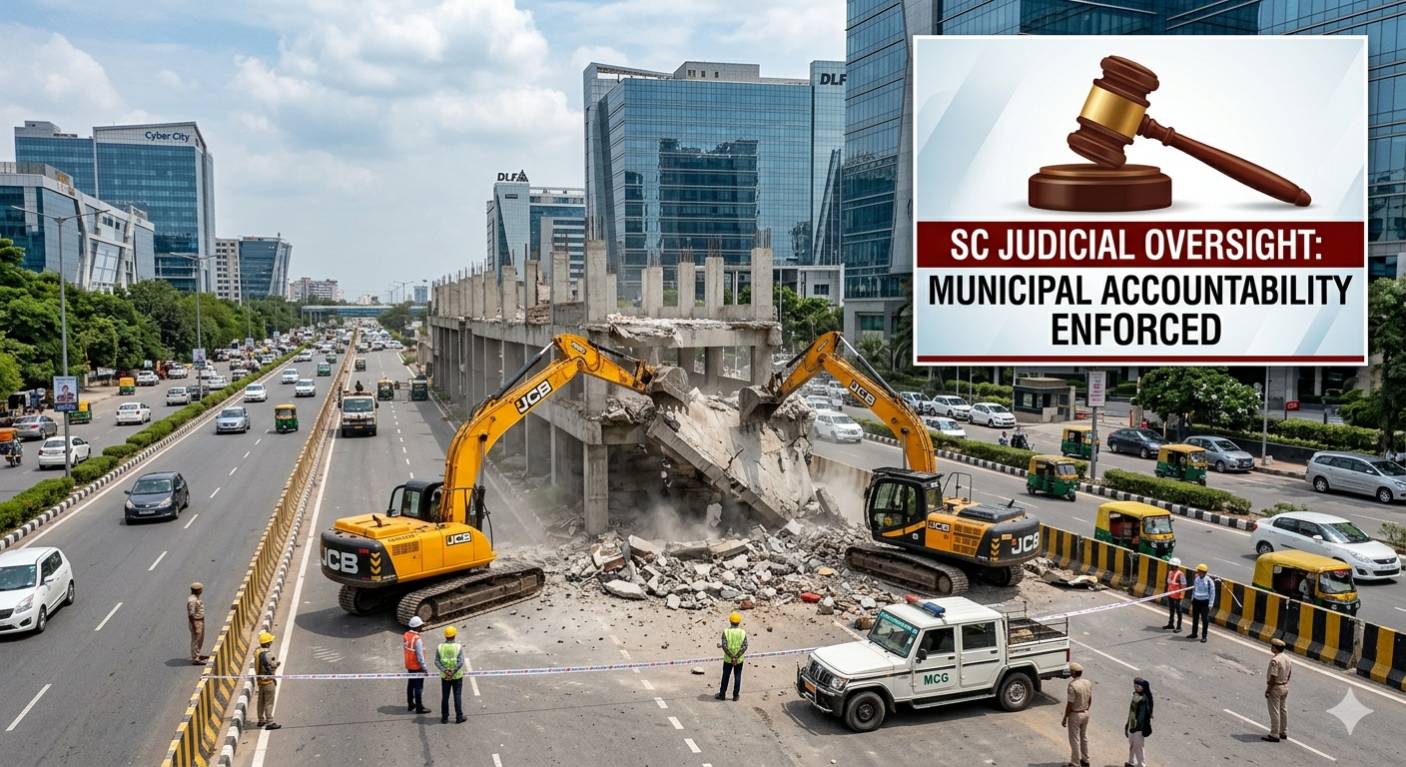
The urban planning and administrative landscape of the National Capital Region (NCR) is undergoing intense scrutiny. In a major legal crackdown on unchecked city sprawl, Civic bodies in Haryana face heat as SC reviews enforcement against illegal structures, issuing severe warnings to senior municipal heads regarding unexecuted demolition mandates.
Presided over by a Bench of Justice Ahsanuddin Amanullah and Justice R. Mahadevan in the countrywide Loganathan case, the apex court has targeted widespread municipal negligence. For property buyers, luxury estate funds, and commercial investors in Gurugram, this aggressive judicial oversight establishes a critical baseline for analyzing structural compliance, project safety, and neighborhood valuation stability.
Core Case Analysis: The Ultimatum on Unenforced Demolitions

The Supreme Court’s direct intervention stems from the systematic non-enforcement of zoning and building byelaws across Haryana’s leading real estate hubs. The court strongly criticized local enforcement bodies for performing superficial, cosmetic operations rather than executing definitive legal corrections.
The key observations and directives issued by the apex court include:
- Personal Accountability Mandate: The Supreme Court explicitly warned that if long-standing demolition orders that have achieved legal finality remain unexecuted, personal financial and legal responsibility shall be fastened directly onto the Municipal Commissioner and CEO concerned.
- Targeting Official Collusion: The Bench demanded detailed status reports tracking the specific disciplinary actions taken against erring municipal officers who knowingly permitted illegal encroachments and fire safety violations to flourish.
- End to Cosmetic Drives: The court expressed sharp disapproval of temporary, face-saving clearance exercises, forcing a transition toward complete land-asset recovery and structural restoration.
Operational Mobilization Across Gurugram’s Enforcement Wings
Following the Supreme Court’s firm position, the Gurugram Metropolitan Development Authority (GMDA) and the Municipal Corporation of Gurugram (MCG) launched a massive, coordinated enforcement drive across all eight city zones.
The localized action plan involves joint operations across several departments to systematically clean up urban planning violations:
- Reclaiming Public Green Belts: Multi-agency task forces comprising the GMDA, MCG, Haryana Shahari Vikas Pradhikaran (HSVP), and the Department of Town and Country Planning (DTCP) are actively demolishing encroachments on government-owned green bands.
- Targeted Demolition Corridors: Heavy demolition teams have moved directly into prominent commercial and residential micro-markets—including Sadar Bazar, Sector 34, Krishna Colony, and the Ammunition Depot restricted zone—leveling dozens of unauthorized structures on day one.
- Strict Utility Sanctions: In line with structural safety guidelines, local power and water utilities are systematically disconnecting links to any building lacking a valid Occupancy Certificate (OC) or formal building plan approval.
Pros & Cons of Aggressive Judicial Enforcement for Property Portfolios
Pros
- De-risks Premium Micro-Markets: Eliminating unauthorized commercial operations protects the valuation baseline of legitimate, RERA-compliant high-street spaces and luxury societies.
- Prevents Slum Proliferation: Halting unapproved structures stops the creation of chaotic, under-engineered urban pockets, ensuring better long-term municipal planning.
- Guarantees Structural Safety: Enforcing ironclad building codes prevents fatal structural collapses, making the local real estate ecosystem safer for families and corporate tenants.
Cons
- Temporary Resale Liquidity Dips: Condominiums or commercial floors with minor design deviations may experience short-term transaction pauses while titles undergo extra screening.
- Disruption in Local Retail Sectors: Demolishing unapproved extensions in secondary commercial zones can temporarily lower customer footfalls during active enforcement periods.
Strategic Due Diligence Checklist for Safe Investments
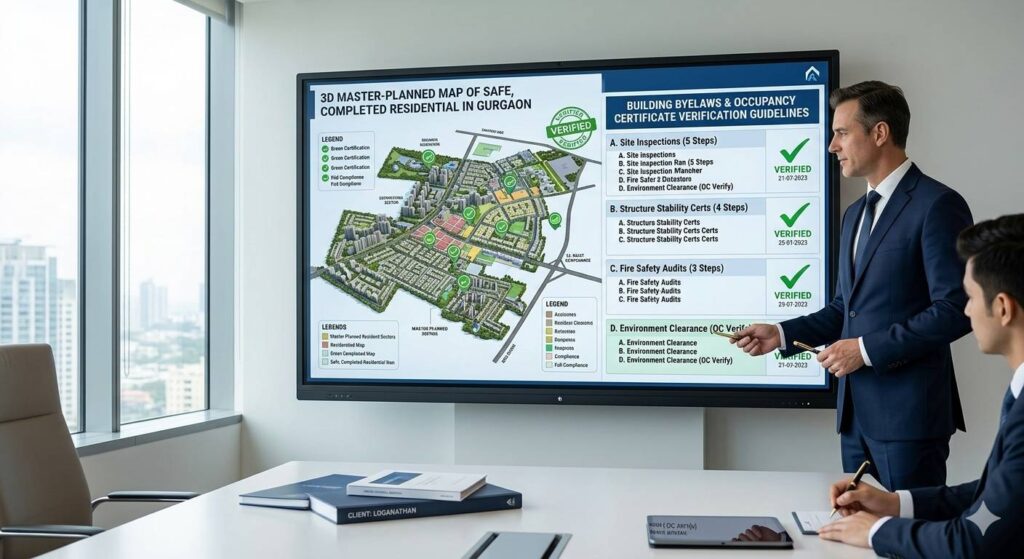
As evidence-based property selection becomes standard practice across Gurgaon, investors must run exhaustive compliance checks to insulate their capital from demolition risks:
- Audit the Approved Building Blueprint: Cross-verify the property’s physical built layout directly against the official municipal blueprints approved by the DTCP to spot any illegal extensions.
- Mandate an Active Occupancy Certificate (OC): Never complete final disbursements or take possession of a residential or commercial unit unless the developer provides a valid, certified OC.
- Cross-Verify Zonal Land Boundaries: Use the GMDA Geospatial Portal to ensure your target project doesn’t overlap with designated municipal roads, green belts, or public utility pathways.
Unsure how the Supreme Court’s latest enforcement directives affect your real estate holdings or upcoming property purchases in Gurgaon? Connect with our specialized regulatory advisory desk today to receive a free, comprehensive compliance review of your property portfolio.
- Call / WhatsApp Us: +91-88-606060-77
- Enquire Now: Request an off-market report on fully verified, 100% litigation-free luxury residential and grade-A commercial developments in Gurgaon.


